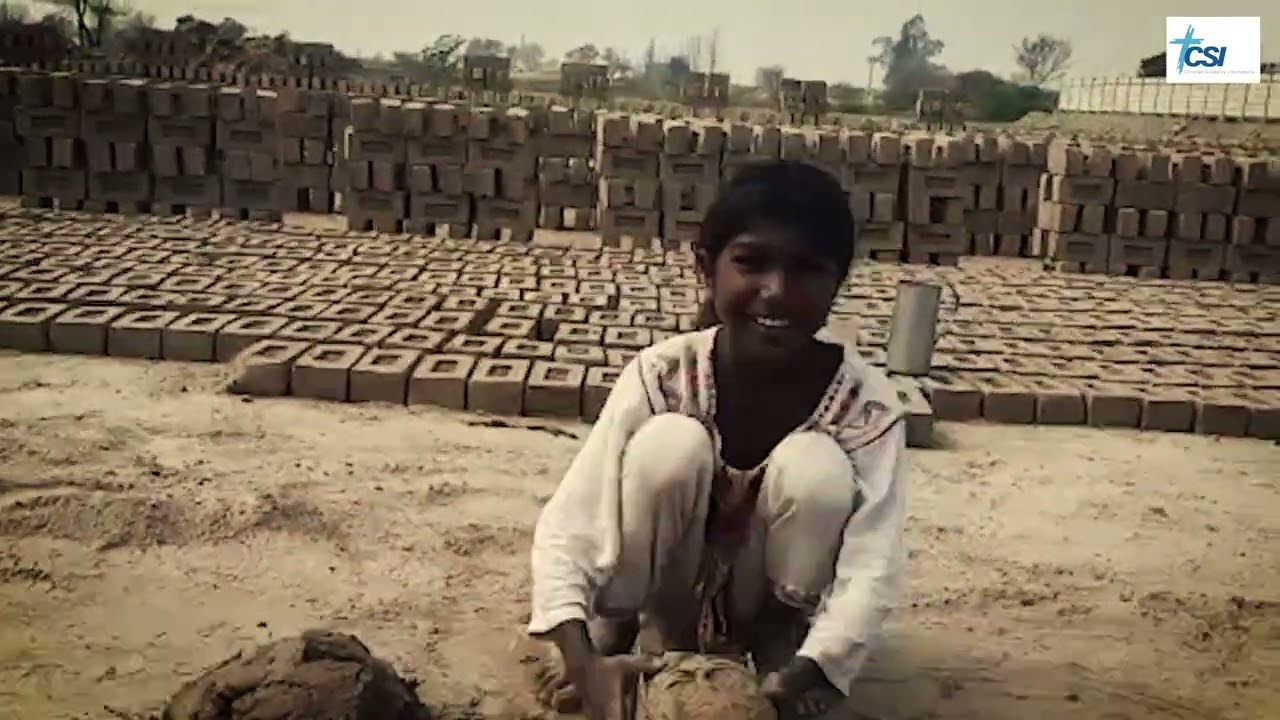
Pakistan banned bonded labor in 1988. Despite that the practice continues and is prevalent in brick manufacturing. As a poor underclass, Christians and members of other religious minorities make up a large proportion of these modern-day slaves.
Adults and children toil under the baking sun from dawn until dusk with few breaks. First the men mix quantities of soil with water to form mud. Using a wooden cart they then transport the mud to the place where the women and children form bricks using a simple mold. When the bricks are partially dry, they pile them up in rows. The next stage is to transport the bricks to the kiln, where temperatures reach over 2,000 degrees Fahrenheit.
The laborers generally live on site, in conditions that are hazardous to their health and with a lack of basic amenities such as toilets. All day long they are exposed to brick dust and noxious fumes. Injuries are common, and many develop lung diseases or lose their sight because of the dust.
Trapped in a debt cycle
The poorest of the poor become bonded laborers when they take out loans or cash advances from a creditor – for instance to cover urgent medical expenses or hospital bills. In return they take on an obligation to work for that creditor until the debt is paid off.
In practice, this never happens. The wages paid are so low that laborers are forced to take out further loans to meet their needs. Before long they are trapped in a cycle of debt, in which amounts owed are passed on from generation to generation. The situation is made worse by factors including high interest rates on loans, unlawful deductions, and falsified accounting.
Laborers are typically required to produce 1,000 bricks per day. The minimum daily wage set by the labor department is around 1,100 rupees – just under four U.S. dollars – per 1,000 bricks, but many kilns pay their workers substantially less.
Denial of fundamental rights
Often, the whole family – children and grandparents included – are forced to work as slave labor in brick kilns to help pay off the family’s debts. It is estimated that one in three brick kiln workers is underage. And in some brick factories, more than half are under the age of ten. As child laborers these minors are often unable to attend school.
CSI’s project partners in Pakistan say brick kiln owners may also deny their Christian workers their religious freedom by preventing them from attending church. Some even offer to cancel their debts if they convert to Islam.
Freeing the captives
For three years now CSI has been running a project to free brick kiln workers from debt bondage. The project prioritizes the liberation of families who suffer from particularly difficult circumstances.
As CSI’s Pakistan project manager says, “We mainly help those in poor health, as well as widows and orphans. It is a great feeling to be able to help a family win back its freedom.”
In 2023, CSI was able to repay the debts of 30 families and provide them with the means to become financially independent.
The Masihs – Arshad and Shabana and their five children – are among those families who were freed from bonded labor in brick kilns in 2023. For 18 years the couple had toiled in a brickyard in Punjab province. The elder children frequently missed school because they had to help their parents fill their brick quota.
Their problems were compounded by serious health issues. Shabana, Arshad’s wife, has arthritis and two of the five children suffer from debilitating illnesses. Arshad had to take out a loan from the factory owner to pay for his wife and daughters’ medical treatment.
The eldest daughter Tania (12) is particularly badly affected. Her rapidly progressing muscle disease meant she became increasingly weak until eventually she could no longer walk. Her younger sister, Hania, has similar symptoms.
Under pressure to convert
Although the family worked as hard as they could, they had no chance of repaying their debt to the Muslim factory owner. “He would have wiped our debts if we had converted to Islam,” Shabana told CSI. “But we firmly refused.”
Thanks to a generous donation, CSI was able to pay off the Masih family’s debt. The donation was enough to purchase a rickshaw, enabling Arshad to work as a driver.
“The business is going so well that I can provide for my family,” Arshad told CSI. “We are eternally grateful to God and to you.”
CSI also purchased a wheelchair for Tania, which allows her more freedom of movement. Arshad is very thankful. “Before, I had no other option but to carry Tania,” he said. “But as she got older and weighed more, this became increasingly difficult for me.”
Shabana is overjoyed at the change in her family’s circumstances. “We are happy and content now. We can now go to church regularly and the children can go to school.”