30 years of slave liberation in South Sudan

In 1995, CSI began to partner with local South Sudanese networks working to free their loved ones from slavery in Sudan. Thirty years later, these networks have liberated more than 160,000 people... and counting.
CSI has been working in Sudan since 1995 to liberate Christians and other non-Muslims who were forced into slavery by Islamist militias allied with the Khartoum regime. To date, we have rescued more than 160,000 people. Still, thousands remain in bondage. CSI’s work will not be done until all are free.
Watch the film: 160,000 and Counting
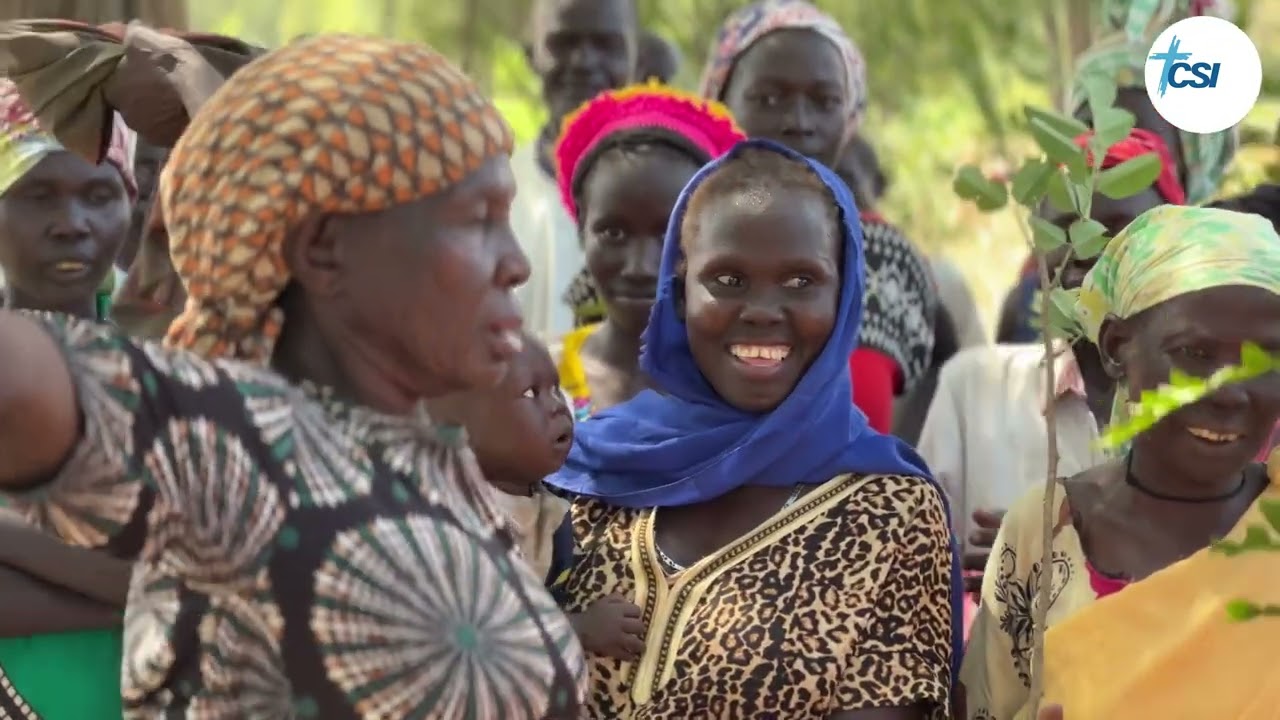
During the Sudanese civil war from 1983 to 2005, pro-government Islamist militias kidnapped tens of thousands of Christians and animists in southern Sudan and brought them to the north as slaves.
In 1995, working with a local underground network, CSI facilitated the liberation of a group of slaves for the first time and returned them to their homes. It was the beginning of CSI’s groundbreaking slave liberation work that still continues 30 years later. And the work will go on, in keeping with CSI founder Pastor Hansjürg Stückelberger’s promise that CSI would not give up its mission “until the last Sudanese slave is free.”


Support our work today
We won't be done until every Sudanese slave is free.
1995-2025: Milestones from three decades of CSI's slave liberation mission
In 1983, the Arab- and Muslim-dominated government of Sudan imposed Islamic law across the multi-religious country. Black African southern Sudan, which follows Christian and traditionalist religions, opposed this and took up armed resistance.
In response to the rebellion in the south, the Sudanese government began to arm Arab Muslim militias and use them as an instrument of its counter-insurgency policy. These militias, sometimes supported by the Sudanese army, regularly raided the borderlands of southern Sudan. They routinely burned villages, stole cows, goats and other movable property, shot men, and captured women and children as slaves.
The war would last until 2005. Tens of thousands of Christians and animists in the south were killed by pro-government Islamist militias or deported to the north as slaves.
CSI began its slave liberation work in 1995.
In 1992, leaders of communities in southern Sudan contacted CSI to request assistance for victims of the civil war. John Eibner, who was in charge of the project, and his CSI colleague Gunnar Wiebalck conducted fact-finding missions to northern and southern Sudan. Through the visits, CSI became aware of the extent of the slavery problem and of the sad fact that the international community was doing virtually nothing to help the slaves.
They also discovered that a small-scale “Underground Railroad” already existed, enabling slaves to be freed and sent home. In 1995, CSI partnered for the first time with this local network of Arab retrievers to locate slaves in Sudan and return them to the south.
CSI’s early approach in Sudan was two-pronged.
First, it bolstered local peace arrangements between Arab and Dinka communities that had agreed to stop raiding each other. CSI sponsored peace conferences to strengthen these agreements, creating safer channels for enslaved women and children to be returned home.
Second, CSI embarked on a major anti-slavery campaign internationally, shining a media spotlight on Sudan’s slave raids and urging policymakers in North America and Europe to act. By 1999, CSI’s advocacy had helped force the issue into the international spotlight. That year, the intense publicity generated by CSI compelled UNICEF to officially acknowledge — for the very first time — that children and their mothers were indeed being enslaved in Sudan. This admission was a breakthrough, as the United Nations had previously avoided the term “slavery” for political reasons.
Sudan was angered by the slave retrieval work of CSI and tried to hinder it. In 1999, Sudan succeeded in having CSI’s consultative status at the United Nations in Geneva withdrawn, in a blow to CSI’s advocacy work. The Sudanese motion was backed by all Islamic states, plus friendly countries including China and Russia. Only the United States actively defended CSI’s work. Not until 2023 did CSI finally regain its United Nations Economic and Social Council accreditation.
As the retrieval operations became increasingly professional, the number of slaves freed rose dramatically. Between the years 2000 and 2003, around 2,000 slaves were freed in each operation. The CSI team would struggle to laboriously photograph and log the full details of all the many thousands returned home every year.
In 2000, U.S. Assistant Secretary of State Susan Rice visited Sudan and met with freed slaves, calling the ongoing enslavement a “heinous” practice and pledging the U.S. government’s commitment to stamp it out. Two years later, President George W. Bush signed the U.S. Sudan Peace Act into law. This made reaching an end to the civil war in Sudan a U.S. foreign policy priority.
In 2005 the civil war came to an end with the signing in January of a Comprehensive Peace Agreement (CPA) between the government of Sudan and the southern rebels. The CPA stopped the abduction of slaves in southern Sudan. However, it made no provision for the liberation of those who had been captured there and taken as slaves to the north before the signing of the CPA. “The issue was seen as too sensitive,” commented Eibner, in an interview to mark the 25th anniversary of the start of CSI’s slave liberation work. “Of course, we were disappointed. Yet, the war was over and with it the slave raids. That was a huge relief.”
By this time, after a decade of CSI’s work, local community leaders had recorded over 80,000 slaves freed through CSI-supported networks since 1995. Yet many more remained in bondage.
Since 2005, every slave freed by CSI receives a dairy goat, in addition to a sack of sorghum and a start pack of essentials. Not only does the goat provide milk; it is also an economic asset that can be traded for other items.
Throughout the 2010s, CSI’s slave liberation work in Sudan continued at a steady pace. With peace between Sudan and South Sudan, CSI’s missions faced fewer armed clashes, but logistical challenges remained. Approximately 1,500 enslaved people were freed each year throughout the decade through around five well-organized liberation actions annually.
Following the end of the civil war, South Sudan finally gained its independence in 2011. More than 98% voted in favor of independence in the referendum. CSI’s John Eibner and Gunnar Wiebalck were among the invited guests at the celebrations held on July 9. However, the Nuba Mountains and Southern Blue Nile regions, with their large Christian populations, remained part of the Republic of Sudan and continue to be targets of the Sudanese military’s counterinsurgency campaigns and persecution.
In January 2013, Franco Majok took over the project management from Gunnar Wiebalck, who had attended every slave liberation since 1995 and made a total of 110 visits to Sudan/South Sudan.
Majok is a Dinka Christian from the area of southern Sudan affected by slavery. One of his own nieces was abducted in 1985 and has never been found. He gives this as one of the factors that motivated him to join in the slave liberation work. “For me, the work is a vocation,” Majok says. “My niece’s fate spurs me on to keep going until all South Sudanese slaves are freed.”
With the start of a new civil war in Sudan, CSI expanded its humanitarian aid distribution from South Sudan to the Nuba Mountains and Blue Nile regions of Sudan. There CSI helps people facing famine, including many who have been displaced by the war.
As CSI marks its 30th year of slave liberation efforts, the organization remains steadfast in its mission, partnering with underground Arab “slave retrievers” to secure freedom for approximately 1,500 South Sudanese annually. This sustained commitment has led to the liberation of over 160,000 individuals since 1995.
Yet the work continues, as estimates suggest tens of thousands still remain in bondage across Sudan. Among these are not only those originally abducted during the civil war, but also a second generation—children born into slavery, many conceived through sexual violence. CSI’s pledge remains: to continue until “the last slave is free.”


Frequently asked questions
CSI’s decision to become involved in slave liberation work followed fact-finding visits to the area where slave raiding had been reported. Most of the slaves held in Sudan are members of the Dinka tribe and Christian. They come from Northern Bahr El Ghazal, an area of what is today South Sudan that borders Sudan.
Invited by native Christian leaders, CSI became aware of the extent of the slavery problem through its visits. Even during CSI’s visit to Khartoum in the north at the invitation of the Sudanese government, CSI staff saw irrefutable evidence of mass enslavement. It was also clear that the international community was doing very little to help, despite slavery being recognized in international law as a crime against humanity.
Much like the “Underground Railroad” in the 19th century United States, a network of Dinka and Arab traders worked to quietly retrieve people from slavery and bring them home to freedom. Still, the existing efforts were individual, uncoordinated attempts for family members to find their abducted relatives. When community leaders asked for CSI’s help, this new chapter in the organization’s work began.
Male slaves are usually sent to look after livestock in cattle camps or help with farming. Female slaves, on the other hand, are required to perform domestic labor or are made to work in the fields.
Freed South Sudanese slaves recount terrible stories of abuse at the hands of the Arab slave masters. Sexual abuse is widespread, especially, but not exclusively, among female slaves. Beatings, death threats, forced labor, and racial and religious insults are commonplace. Slaves have been killed for displeasing their masters. Those who try to run away are often killed if caught.
Slaves are also regularly forced to convert to Islam – given Muslim names, forced to pray in a Muslim manner, and forbidden to practice Christianity. Boys are sometimes forced to pray like Muslims and girls are routinely subjected to genital mutilation, which is seen as a religious requirement among Muslims in the region.
Many of those whom CSI frees today were born into slavery. They have never known what it means to be free.
In the early 1990s, some Arab clans which depended on southern Sudan economically established agreements with their Black African neighbors to the south. These Arabs were allowed to trade at designated markets in southern Sudan and graze their cattle in designated areas, in return for facilitating the return of women and children who had been enslaved. For some of the Arab traders, personal relationships with these southern neighbors also drove their willingness to help.
CSI strengthened the extensive indigenous network of Arab traders and local officials to coordinate efforts to free slaves still in the north. A peace treaty in 2005 put an end to the slave raids. It also paved the way for the south to become the independent country of South Sudan in 2011. However, the treaty provided no way home for those already enslaved. Thus, CSI continued the work of freeing slaves and bringing them back to their homeland.
CSI does not exchange cash for slaves. Instead, we provide cattle vaccines to slave-owning Arabs for use in their cattle camps in order to secure the release of the slaves.
When slaves return to South Sudan in groups accompanied by Arab traders, their information is documented and photographed by local community leaders and CSI staff. Tribal chiefs then help locate the families of the liberated slaves.
Slave liberations take place five times a year. Every time 300 people – men, women and children – are released from captivity and returned to South Sudan, where they are welcomed with a large celebration. Often, they are reunited with their family members; otherwise, they are taken care of by the host community of a local village.
After years in captivity, suddenly returning to a life of freedom can be an enormous challenge. Liberated slaves often have no home to return to. With no means of providing for themselves, they are also at risk of famine.
CSI developed a special aid package to assist survivors of slavery. These “Sacks of Hope” are delivered to each freed Sudanese slave. They contain a tarp for shelter, a cooking pan, a water canister, a mosquito net, a blanket, a handheld sickle, fishing hooks and a ration of sorghum, a local nutrient-rich staple food.
CSI also provides each slave with a dairy goat. Goat milk can be turned into a variety of products that help fight off hunger. A goat is also an asset that can be traded for other goods.
Slaves who have returned to South Sudan often require medical assistance for a variety of injuries and health issues. A CSI medical team treats cases of malaria, as well as eye and respiratory infections. Those returnees requiring specialist care may be sent for treatment to a local clinic, or to Kenya for surgery. In addition, CSI provides psychological care and spiritual guidance as needed.
The relationship doesn’t end there. Where possible, the CSI team maintains contact with freed slaves and monitors their progress as individuals living in freedom.
It currently costs CSI about $250 to help emancipate a slave and then supply him or her with:
- A survival kit to meet immediate physical needs
- A goat to sustain nutrition and provide fertilizer
- Sorghum, a hearty, drought-resistant grain for food
- Seeds and tools for planting
The price assigned to a human life is jarring: roughly equivalent to $50 USD. For nearly a decade, CSI financed those 50,000 Sudanese pounds required to pay for the liberation and return of each slave. In local terms, that was the purchase price of two goats. Now, CSI no longer exchanges cash for slaves. Instead, we make cattle vaccines available to slave-owning Arabs in order to secure the release of the slaves.
No. The revival of slavery in Sudan in the 1980s was not driven mainly by economic forces. Instead, political, military, and religious factors drove the surge.
Slave raiding in southern Sudan then stopped in 2005 with the end of the civil war, after the signing of the Comprehensive Peace Agreement between the Government of Sudan and the SPLA. The people now enslaved in Sudan were either abducted before 2005 or born into slavery.
CSI only liberates slaves with local support. Religious and civil leaders of the victimized communities would not have encouraged CSI to redeem slaves if they had experienced an increase of slave raiding because of CSI’s efforts. To the contrary, the slave-raiding ended after CSI’s liberation work drew international attention to the enslavement of primarily Dinka communities. There is a broad consensus within these communities in favor of the CSI-supported liberation system.
To learn more about CSI’s slave liberation work and relief efforts in South Sudan and Sudan, click here.