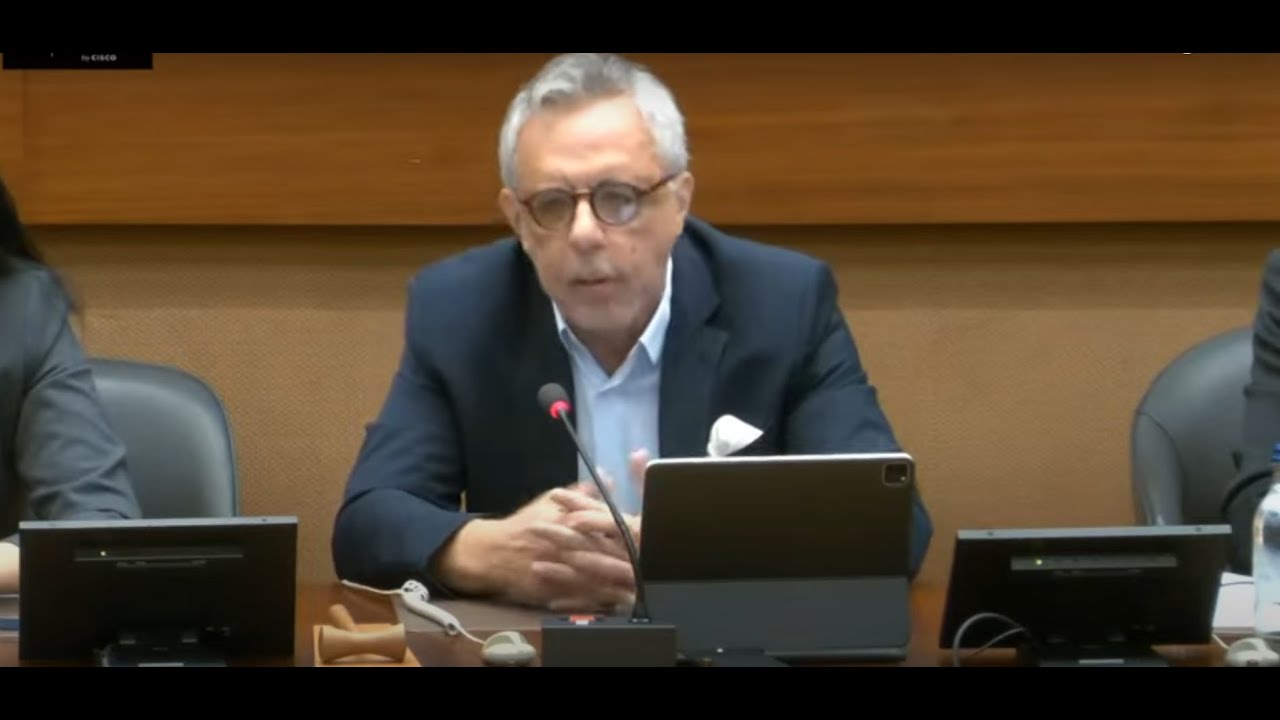
Opening Remarks by H. E. Vartan Oskanian
United Nations, Geneva, 9 July 2024
The reason we are here today is to plead for two things: justice for the people of Nagorno-Karabakh and durable, lasting peace between Armenia and Azerbaijan. These two goals are inextricably interconnected.
Let me start with justice and say a few things about the people of Nagorno-Karabakh and the territory they inhabit. The right of the Nagorno-Karabakh people to live in peace and dignity in their historic homeland is compelling, given the exculpatory conditions surrounding Nagorno-Karabakh’s case:
Nagorno-Karabakh has never been part of independent Azerbaijan and has maintained a coherent identity as a people with an attachment to the land of Nagorno-Karabakh for centuries. During the period of 1918-1920 republics of Armenia and Azerbaijan it was a disputed territory. During Soviet times, Nagorno-Karabakh held the status of the Nagorno-Karabakh Autonomous Oblast and maintained an effective, democratic, and legitimate government over the territory for the thirty years since the dissolution of the Soviet Union.
Peace negotiations between Armenians and Azerbaijanis during this period took place under the auspices of the OSCE Minsk Group co-chairmanship—the US, France, and Russia—and sought a peaceful settlement to the conflict. Notably, these negotiations were grounded in the principles of non-use of force, territorial integrity and self-determination of peoples.
I have been at the forefront of these talks from the early ’90s to the end of my tenure as foreign minister in 2008. I know every nook and cranny of the negotiations. The OSCE Minsk Group set forth the basic elements for a “just and fair” settlement of the conflict. (a) return of the territories surrounding Nagorno-Karabakh to Azerbaijani control; (b) an interim status for Nagorno-Karabakh providing guarantees for security and self-governance; (c) a corridor linking Armenia to Nagorno-Karabakh; (d) future determination of the final legal status of Nagorno-Karabakh through a legally binding expression of will; (e) the right of all internally displaced persons and refugees to return to their former places of residence; and (f) international security guarantees that would include a peacekeeping operation.
On September 27, 2020, while these principles held, Azerbaijan launched a surprise military attack, thereby violating the fundamental principle of non-use of force. In the course of 2023, Nagorno-Karabakh was subjected to severe blockade, violence, obstruction of humanitarian aid, and military aggression by Azerbaijan, this time in violation of November 9, 2020 cease fire agreement..
On September 19, 2023, after enduring nearly ten months of a blockade that caused mass starvation, deprivation, illness, and death, and now faced with imminent destruction, the entire Armenian population fled its homeland amidst patent threats of ethnic cleansing and genocide.
In fact, in a report released in August 2023, Luis Moreno Ocampo, the founding prosecutor of the International Criminal Court, accused Azerbaijan of committing genocide by intentionally subjecting the group to conditions aimed at its physical destruction, as outlined in Article 2(c) of the United Nations Genocide Convention.
Only recently, the Freedom House put out a report on the issue.
The gathered evidence they said demonstrates that the Azerbaijani state acted upon a comprehensive, methodically implemented strategy to empty Nagorno-Karabakh of its ethnic Armenian population and historical and cultural presence.
Today, Azerbaijan stands defiant, denying the people of Nagorno-Karabakh their fundamental rights. Azerbaijan illegally holds Armenian prisoners of war while all Azerbaijani prisoners of war have been returned. It holds innocent civilians and, most notoriously, a large group of current and former political leaders of Nagorno-Karabakh with whom the Azeri leadership and the representatives of the international community, principally the Minsk Group co-chairs, have been engaged for decades in peace talks. Azerbaijan persistently and with impunity expropriates Nagorno-Karabakh people’s properties, desecrates, destroys, and eliminates centuries-old Armenian cultural heritage. On top of all this, Azerbaijan occupies chunks of territories of the Republic of Armenia and threatens further territorial grabs from Armenia.
While the current situation in Nagorno-Karabakh does not favor a safe return, international law protects the right of return of forcibly displaced people to their territory of origin. This right is recognized as a customary norm of international law, human rights law, and international humanitarian law.
The International Court of Justice’s ruling on November 17 of last year required Azerbaijan to facilitate the safe and unhindered return of Nagorno-Karabakh Armenians to their country. On March 12 of this year, the European Parliament passed a resolution urging Azerbaijan to engage in meaningful dialogue with the Karabakh Armenians to ensure their rights and security, including the right to return to their homes under international protection. So far, Azerbaijan has not taken any meaningful steps to fulfill those orders.
I will urge the UN, in the person of Madame Ashwini, Special Rapporteur on contemporary forms of racism, racial discrimination to undertake a fact-finding visit to the displaced people of Nagorno Karabakh, and submit a report on the ethnic cleansing of Nagorno Karabakh to the Human Rights Council.
Now let me circle back to where I started and talk about just and durable peace. Despite the challenges, the people of Nagorno-Karabakh remain resolute in their determination to return to their homeland, determine their political future, and exercise their own democratic self-governance.
Repatriation under international protection, such as a transitional UN administration and peacekeeping, is crucial for achieving a just and lasting peace between Armenia and Azerbaijan. A fragile notion of stability, achieved through coercion and force, is inherently impermanent. Lasting peace can only be realized through a comprehensive resolution that restores the fundamental rights of the people of Nagorno-Karabakh.
This principle must be enshrined in any peace agreement between Armenia and Azerbaijan, as sustainable peace remains elusive when the people of Nagorno-Karabakh remain forcibly displaced from their ancestral lands.
If we truly would like to achieve a just and durable peace between Armenia and Azerbaijan and the region, Armenia must overcome its fear of war when it defends its legitimate rights, and Azerbaijan must snap out of its euphoric sentiments still dominant since the end of the 44-day war and stop viewing and treating the peace talks with Armenia as a continuation of a capitulation process.
Negotiations work when both sides enter into them in good faith and the right mindset, even if there is a lack of trust. Today, both sides, as well as many in the international community, seem to think that a military loss—and Armenians did indeed suffer a military loss—equals conceding all international norms, human, civil and political rights, and submitting to any sort of rule proposed by the other side. This is not a workable formula for peace between Armenia and Azerbaijan and clearly not a good precedent for the peaceful resolution of other ongoing conflicts around the globe.